
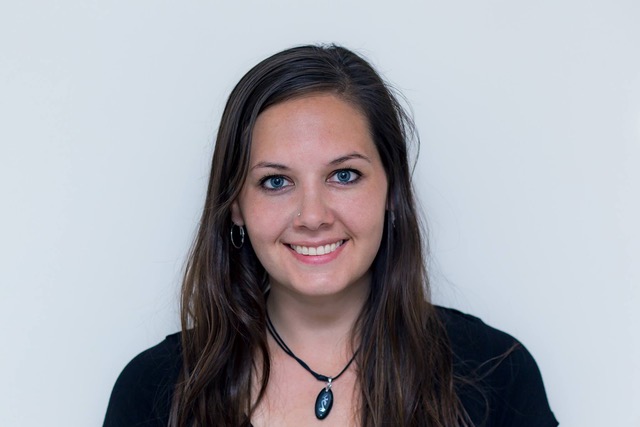
Paula was awarded The James Burn Scholarship for 2018.
Not many in the Canadian public are aware that up to the early 1970’s their provincial health departments, particularly Alberta and British Columbia, were implementing sterilization programs influenced by Eugenics thinking. These programs have led to a breakdown of trust within minority communities, whom often express fear and suspicion over public health interventions today, including vaccinations.
Paula Larsson is in her third year of the Doctor of Philosophy in History at New College, Oxford. Her Dissertation ‘Immigrants, Indigenous People, and ‘Others’: A History of Vaccine Policy and Eugenics Theory in Canada, 1920-1980’ will focus on public health programs, looking at official attitudes and policies from 1920 to 1980, which regulated Indigenous and Immigrant health. She believes that her research will facilitate a step towards national recognition of Canada’s Eugenics past. Eugenics ideology ran deep in the establishment of Canada’s medical systems and it often justified variations in the application of health policy. Archival research has unearthed instances of medical injustices, including racial profiling that permitted medical authorities to undertake non-consensual research on Aboriginal populations during the 1950s and 1960s, and mental profiling of immigrant children which justified their removal to training schools for the ‘mentally unfit’.
Looking at the history of health policy in Canada, Paula has discovered that federal and provincial public health implementation programs differed widely amongst different social groups. Vulnerable minority populations – often indigenous people or new immigrants – experienced restricted choice in the case of vaccines. They could be targeted for the testing of new vaccines, and were often unable to provide informed consent.
In 2016 Paula was awarded a Master of Science from Oxford University in Medical Anthropology. Her previous research has focussed on the health of First Nations of Canada, and her DPhil graduate research will expand on this theme. She has now completed her field work requirements and has reached the writing-up stage of her thesis with an emphasis on vaccination programs. Her analysis will combine both an historical narrative and an anthropological theory. She plans to submit her thesis dissertation in the autumn of 2019.
Paula has been partially funded by a Canadian grant from the Social Sciences and Humanities Research Council (SSHRC). In addition to this, she has, for the second year in a row, been awarded a CCSF scholarship. Her Oxford referees have given the strongest academic support, without reservation.
Paula has always shown a strong community activism and a sympathy with vulnerable members of society. As a child she volunteered with her family in a Calgary food bank program. She has worked with Indigenous communities, organizing public lectures with the Stony Nakota tribal council and hosting Indigenous representatives in the annual Bow River Graduate Conference which she began while studying her Master of Arts in History at the University of Calgary. Since moving to the United Kingdom, she has shown a similar commitment to service.
Her latest public venture is the “Uncomfortable Oxford Project,” which she founded this year. This is a public outreach project that seeks to address the ‘uncomfortable’ aspects of Oxford’s past – especially its ties to imperialism, colonialism, and slavery. She has run numerous free public walking tours, through various Oxford City and University sites, discussing the legacies of colonialism. It has proved so popular that it has expanded into running public lectures, events, and even training workshops for university members.
Paula’s research has exposed unpalatable aspects of Canada’s historical health care programs. She has shown judgement in handling sensitive confidential material from archives. Her thesis promises to be a promising assessment of her topic.
